




【On-site Report vol.03】There is not one emotion – Gojigen’s challenge to the future of theater and accessibility
2025/12/26
momocan / Gojigen Performance Report with Viewing Support
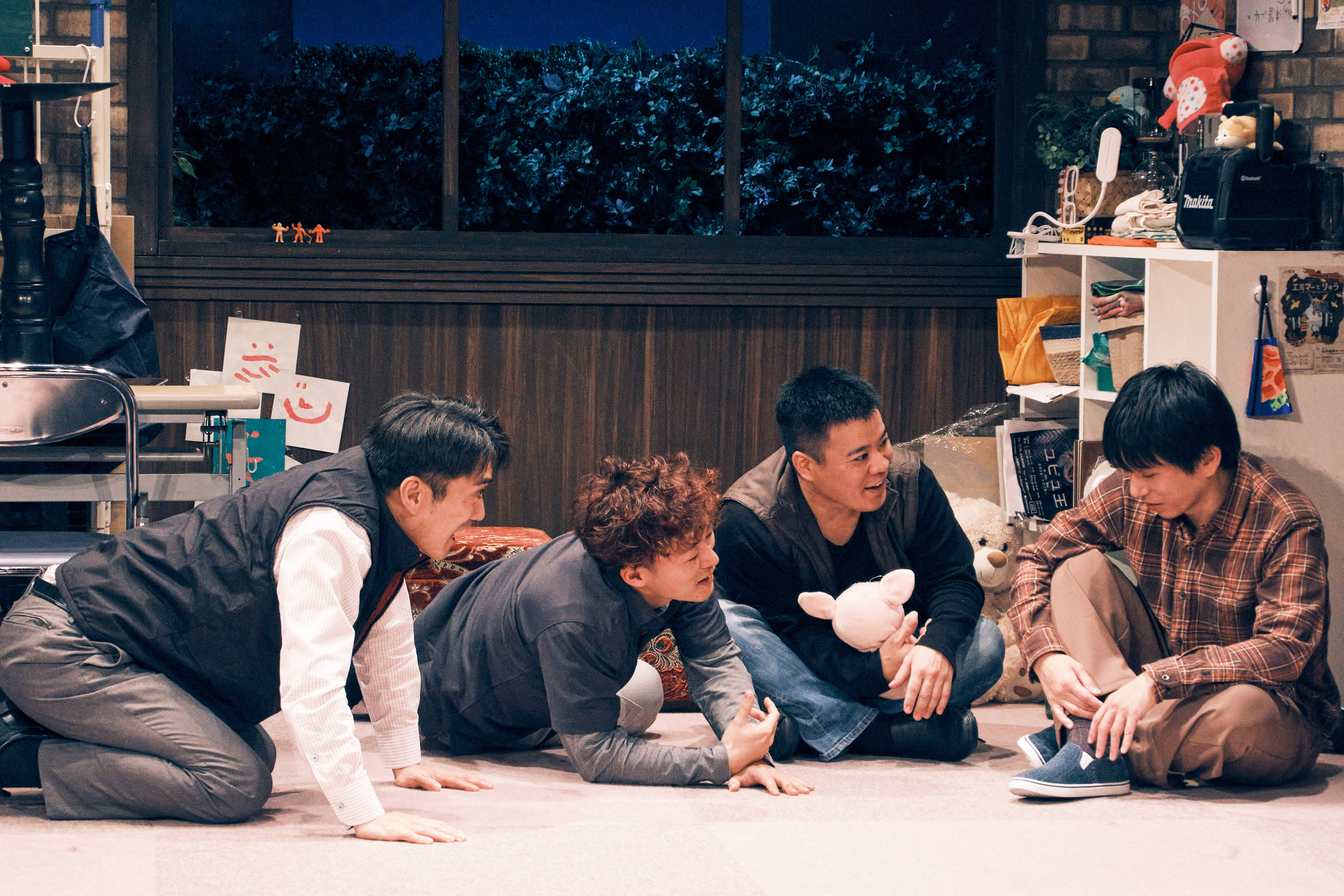
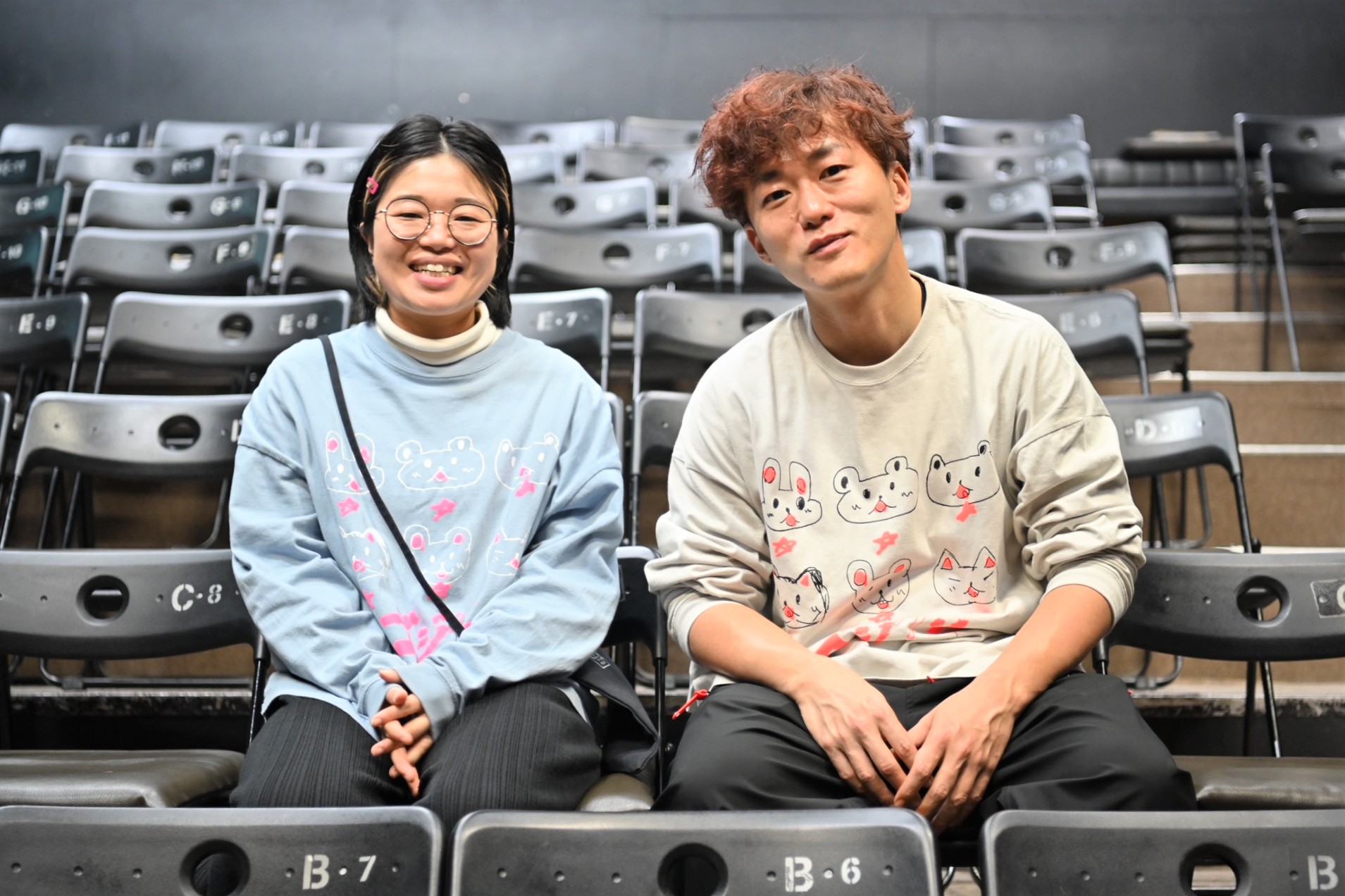
A new wind of accessibility is blowing in the theater scene. What the theater company Gojigen tried to do in its 20th performance “Your Nice Day” was to introduce viewing support such as subtitles, sign language interpretation, and equipment rental. In an interview after the performance, Daigo Matsui, who was in charge of writing and directing, and Momocan Handa, who was involved in the production, talked about the background, challenges, and prospects for the future.
Loving analog expressions: the choice of puppet theater
In an era where social media, distribution, and AI are permeating our lives, why puppet theater? Mr. Matsui says:
“When I thought about what kind of position theater should be, I wanted to love very analog expressions.”
The theme of the work is “puppet theater in the shopping street”. While incorporating the “flames” and dark aspects of social media unique to modern society as elements, the motif of a puppet show that accompanies a small local festival highlights the “lovely analog expression” that does not lose its brilliance over time. Mr. Matsui, who is working on the original draft and script of the puppet show for NHK’s “Together with Mother”, adopted a puppet that can be handled with one hand and tried to produce a production that even amateurs could challenge.
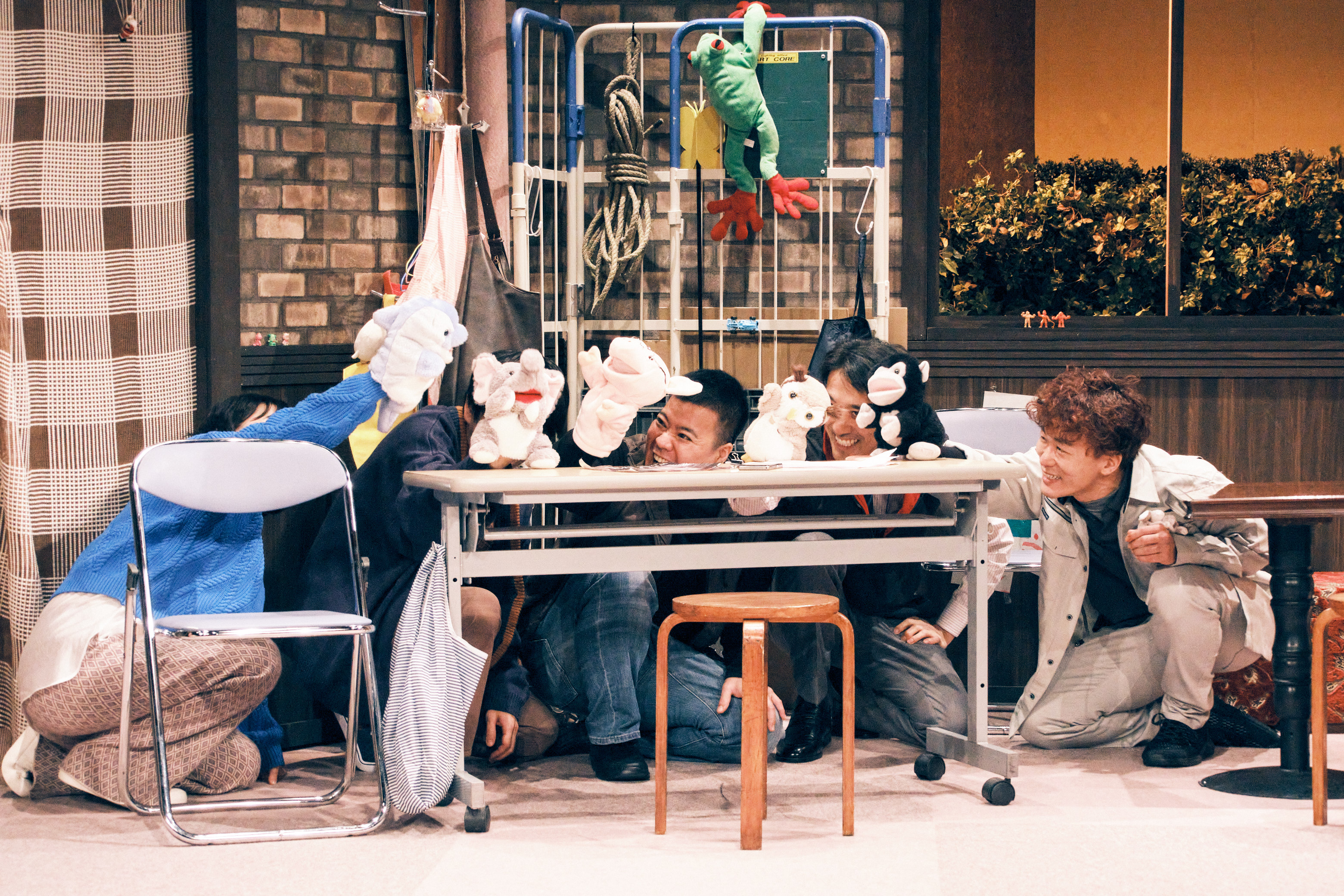
Background of the introduction of subtitles: from film to stage
The impetus for the introduction of viewing support was a suggestion from Mr. Handa, who has been working to improve accessibility, including viewing support, mainly in theater.
“I had given barrier-free Japanese subtitles for the movies directed by Mr. Matsui, so I wanted to try it on stage as well.”
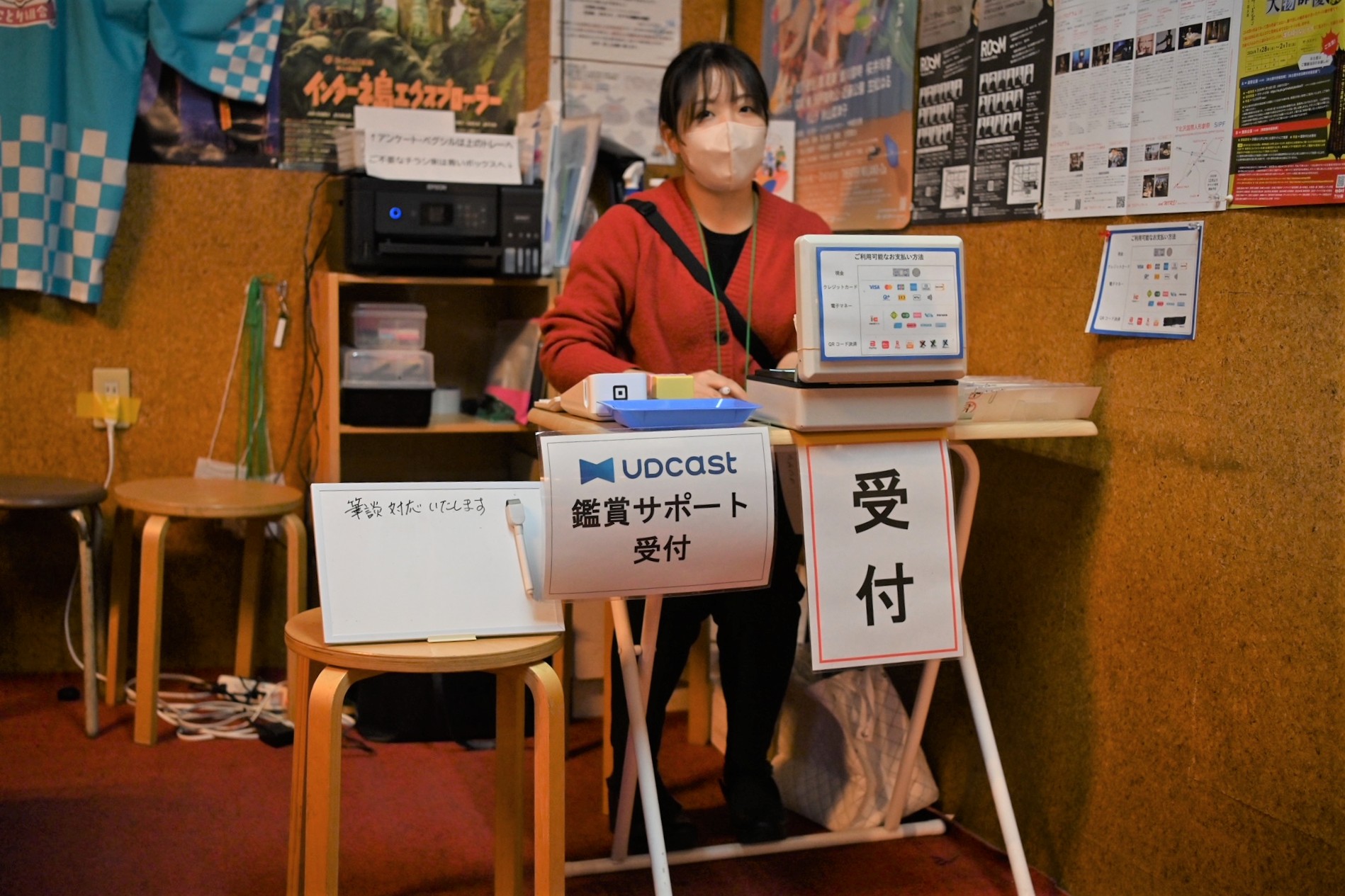
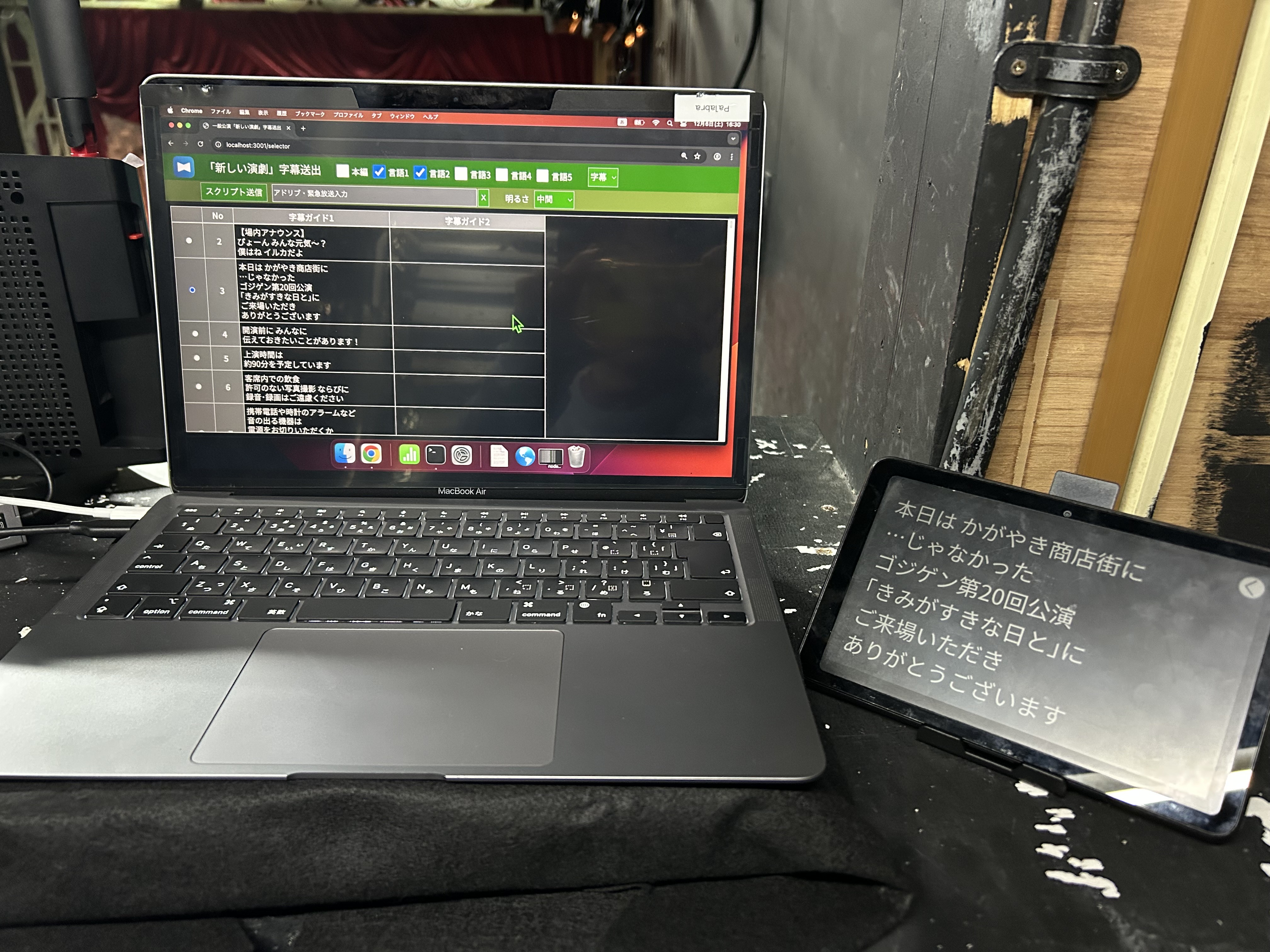
Last year, scripts were rented, and this time barrier-free subtitles were introduced using the Tokyo Arts and Culture Appreciation Support Subsidy. At the reception desk, information on borrowing equipment for subtitle display was clearly indicated, and sign language interpreters were placed to respond to visitors. These viewing support will be implemented in the second half of the performance schedule, and users will say, “I’m happy to be able to understand the content thanks to the subtitles, and I thought that the increase in theater appreciation, which was far away for me, was really far away, and it was a little colorful to my life.” “It was a play that I was glad I saw. I also wanted to see it again if I had the chance.” There was a reaction like this. In addition, it is said that the awareness of the performers has increased, such as greeting the performers in sign language with “thank you” at the end of the performance.
The Barrier to Popularization: How to Overcome It
-What is needed and what is lacking in order to popularize viewing support-
Mr. Handa answers frankly.
“The problem is that there are few users even after implementing viewing support. We need to go to meet them from here, provide opportunities to come into contact with information, and provide opportunities for experience.”
Matsui continues.
“I want to lower the threshold so that people can access theater as if they were watching a movie, and I think it is necessary to spread on-site reports on social media and official websites to expand awareness of theater itself.”
“In order to remove these barriers, it would be nice if the creators could actively reach out to the community and design opportunities for dialogue and experience.”
In addition, Mr. Handa cites the cost of introducing viewing support and the burden on production as issues.
Having the necessary materials and equipment for viewing support on the theater side may lead to a reduction in the introduction cost of the organizer of the performance, etc., and the smaller the organization, the easier it is to focus limited resources on the production of subtitles and audio guide software.
On the other hand, it may be difficult to introduce the installation itself due to the burden of costs required to introduce and update equipment in response to the ever-advancing technological progress, and structural constraints such as barrier-free audio guides, especially in small theaters, and the difficulty of spreading the demand for environmental maintenance on the part of theaters can also be glimpsed.
The “barrier of dissemination” is different and changes from moment to moment in each phase of the organizer and theater of performances, and in each phase, from the trial introduction of viewing support to the expansion to meet the needs of the people, and the stable and continuous operation of these works. There is no one solution. It is necessary to collaborate with the public sector that supports these and various entities that request viewing experiences to optimize the zagumi that eliminates each of the barriers in front of us.
Expected effect: a broadening vision of the future
The introduction of viewing support is not just a technical response. It is a challenge to expand the base of culture. Increasing the number of visitors through community collaboration and improving in response to feedback from users – these are chained and interact organically and continue to circulate, making theater more open. As Mr. Matsui commented, if an environment is created where people can enjoy theater as if they were watching a movie, it will lead to the development of a new audience.
Cultural Significance: Making “Life” Experience Accessible to Everyone
The performing arts have long been supported by enthusiasts, but due to various restrictions, there were people who could not share the excitement of the viewing experience. Gojigen’s attempt this time is the first step in breaking down such barriers and making theater more open. Because theater is “live”, efforts are required to shorten the distance between the audience and the audience. After these efforts accumulate, there is a future where everyone can share various emotions in the same space.
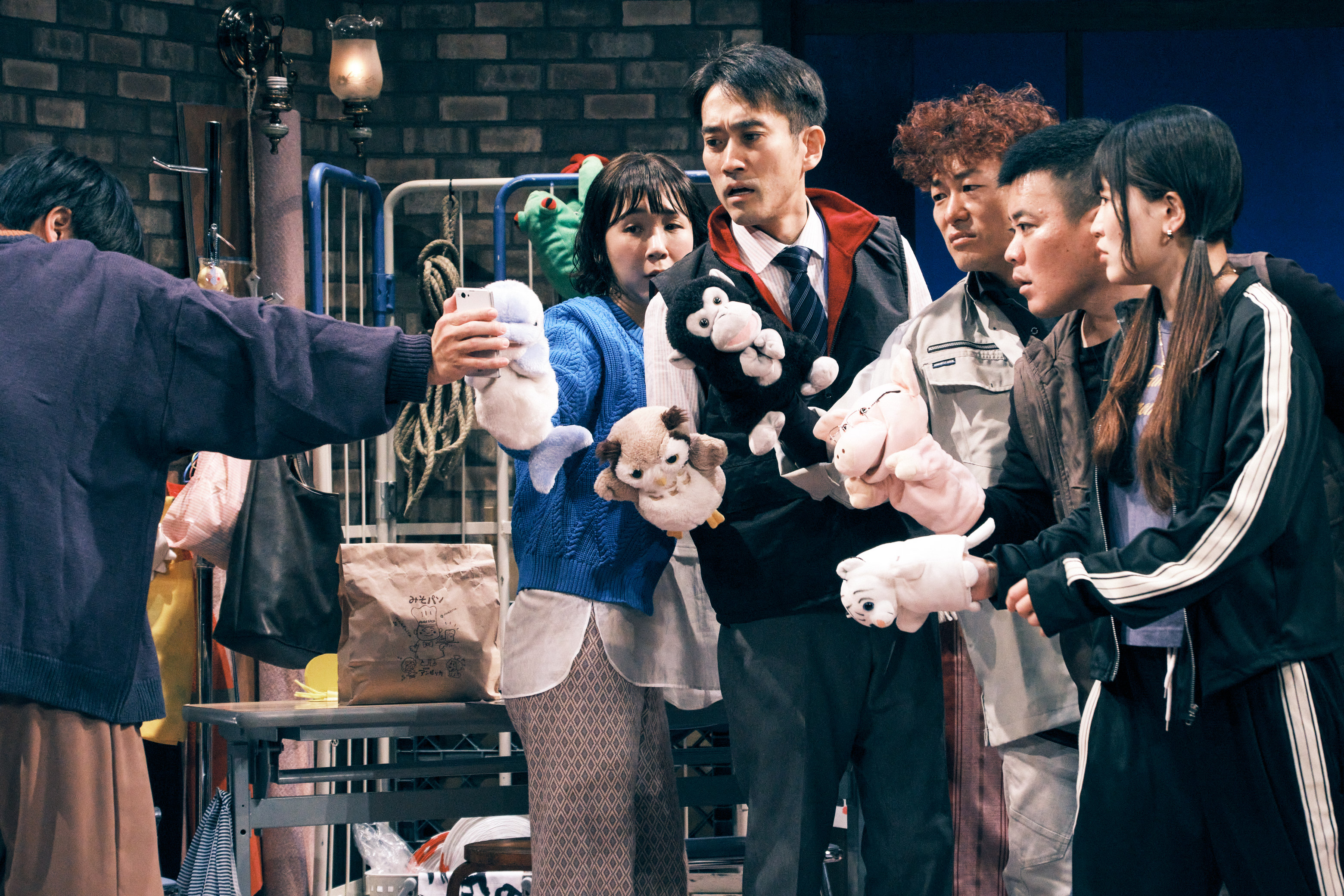
Mr. Matsui’s message: There is not one emotion
At the end of the interview, Mr. Matsui concluded:
“There is not one emotion: the person next to me is laughing and I am crying. I want to create such a place.”
The value of theater lies in its “analogueness” and “coexistence of diverse emotions.” Until that time when everyone can sympathize with its value, the challenge of accessibility will continue.

![[On-site report vol.06] &…](https://awt.rekibun.or.jp/wp-content/uploads/2026/02/Chupikiさん_写真_11-768x512.jpeg)