




[Field Report vol.04] TOKYO FORWARD 2025 Cultural Prorum “TRAIN TRAIN TRAIN” Challenge for Sign Language Interpreter Training Students
2026/02/04
On December 6, 2025, at the Tokyo Metropolitan Theatre, we interviewed three students who participated in the sign language interpretation training in the field of arts and culture in the 6th year of Reiwa. This training was sponsored by the Tokyo Metropolitan Government and the Tokyo Metropolitan Foundation for History and Culture Arts Council Tokyo and began last year. With the aim of training sign language interpreters who will be responsible for information security in the arts and culture fields such as museums and theaters, this program consists of practical content, from the basic knowledge necessary for sign language interpreters to interpreting skills in accordance with the situation of sign language interpretation in the field of art and culture.
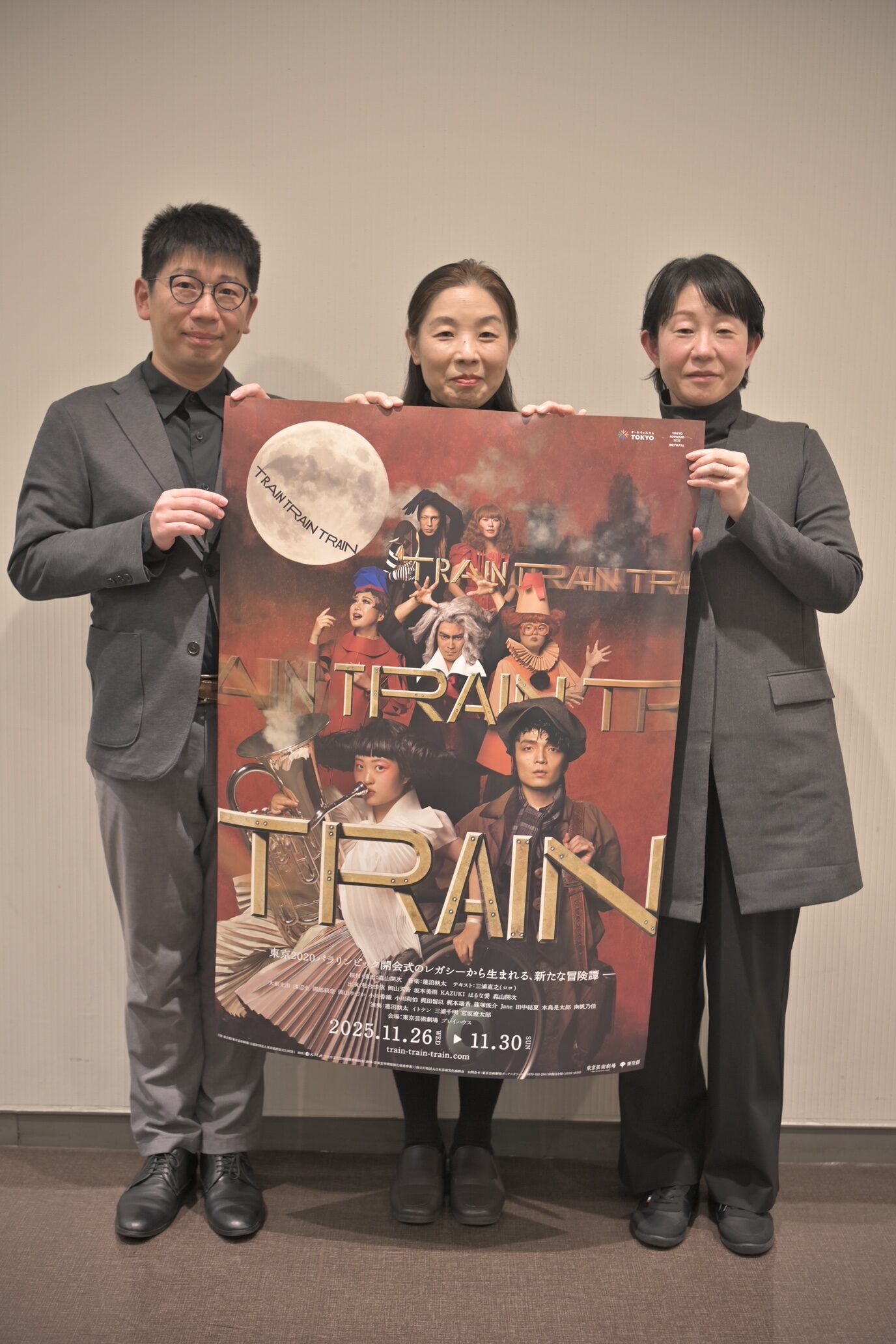
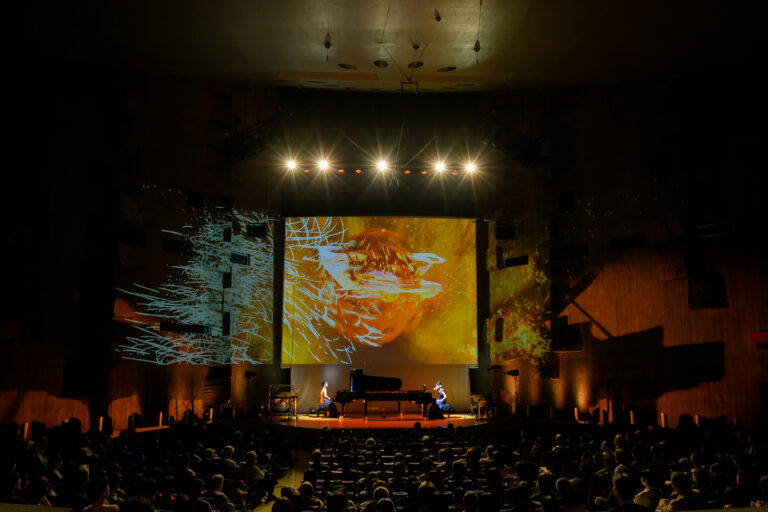
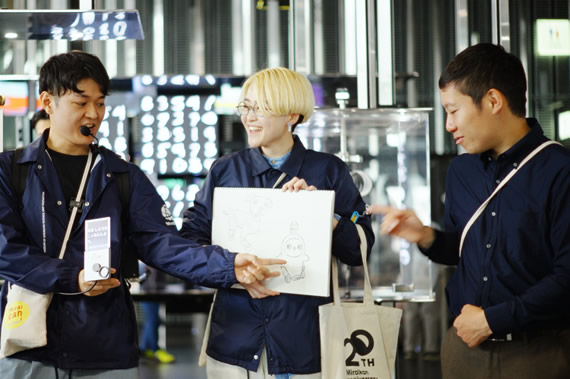
We spoke to Hanako Iwamoto, Masato Shimizu, and Ikuko Ohara. They played a role in supporting the accessibility of the performing arts by joining the production site from rehearsals to productions in the stage play “TRAIN TRAIN TRAIN” performed at the Tokyo Metropolitan Theatre as part of the TOKYO FORWARD 2025 cultural program. We asked him about his feelings and aspirations now that he has completed his practice in the field.
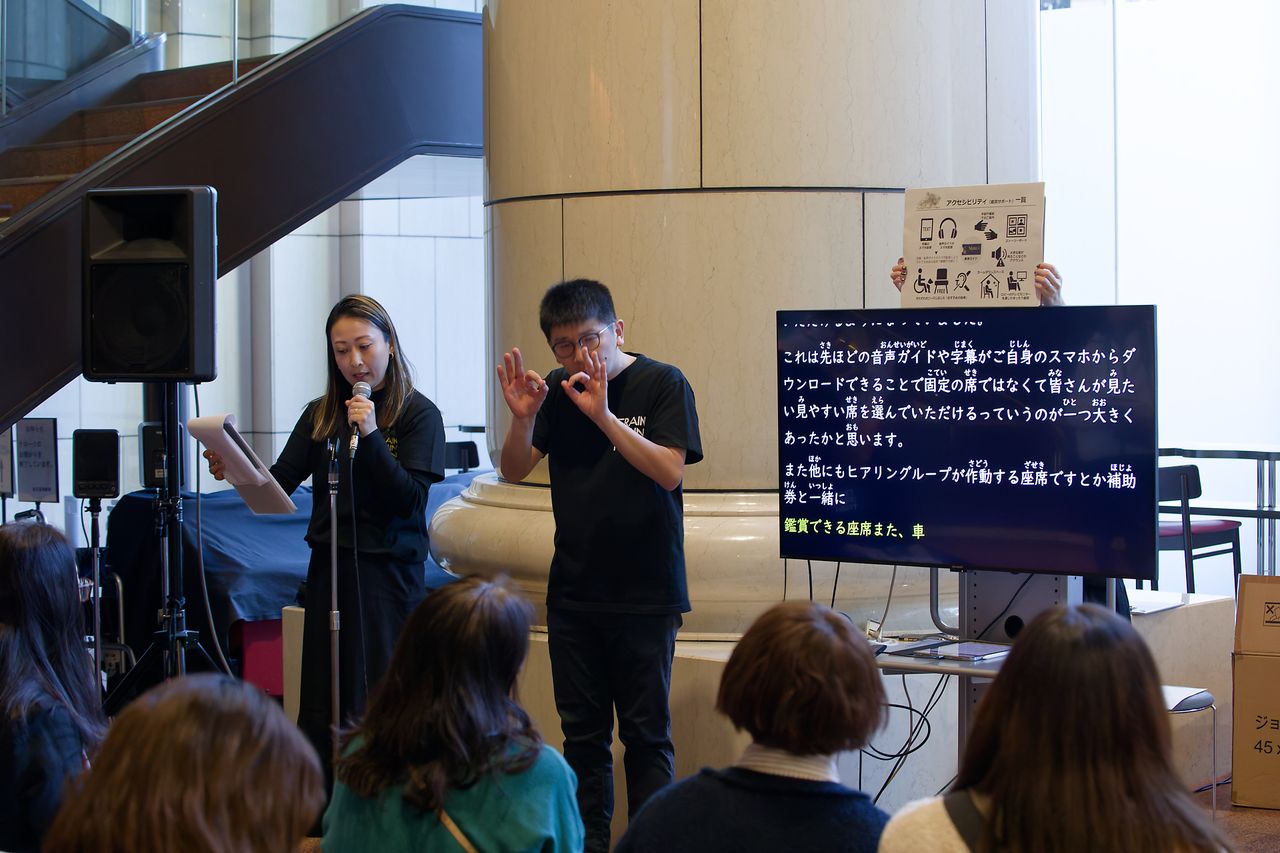
From training to the field – as a member of the “TRAIN TRAIN TRAIN” team
In addition to the interpreting skills required in art galleries, museums, theaters, etc., the three students also learned knowledge of the production process of cultural projects during the training, and participated as sign language interpreters in this work at the Tokyo Metropolitan Theatre, where diverse personalities gather regardless of disability, gender, or nationality.
“At first, I was confused, and I was worried about how to translate the technical terms and abstract expressions of the stage,” says Iwamoto. Shimizu said, “The stage scene moves quickly, and if you focus too much on one point, you will not be able to see your surroundings. I felt the difficulty of interpreting while looking at the whole thing broadly and grasping various things.” The stage “TRAIN TRAIN TRAIN” is a work in which music, body, and language intersect. In the rehearsal hall, in addition to dance and ballet jargon and improvisational exchanges, there are many elements that are not expressed in words, such as changes in lighting and sound. “Even when I didn’t know how to translate, I was grateful for the environment where my colleagues could check and supplement me,” says Iwamoto.
I was able to hear specific stories about how the skills I gained during the training were put to use in the rehearsal hall. Shimizu says that he tried to grasp the situation in order to cope with the speed of the stage progression, and was able to calmly respond to situations where multiple instructions were flying around. In customer service, he was able to understand customer requests and contribute as a member of the staff, such as operating subtitle equipment and guiding the venue. At first, each of them was worried, but in the end, they felt that they were lined up as members of the team, and Shimizu said, “I was happy to be able to be there on the stage, where both those who cannot hear and those who can hear create works together.”
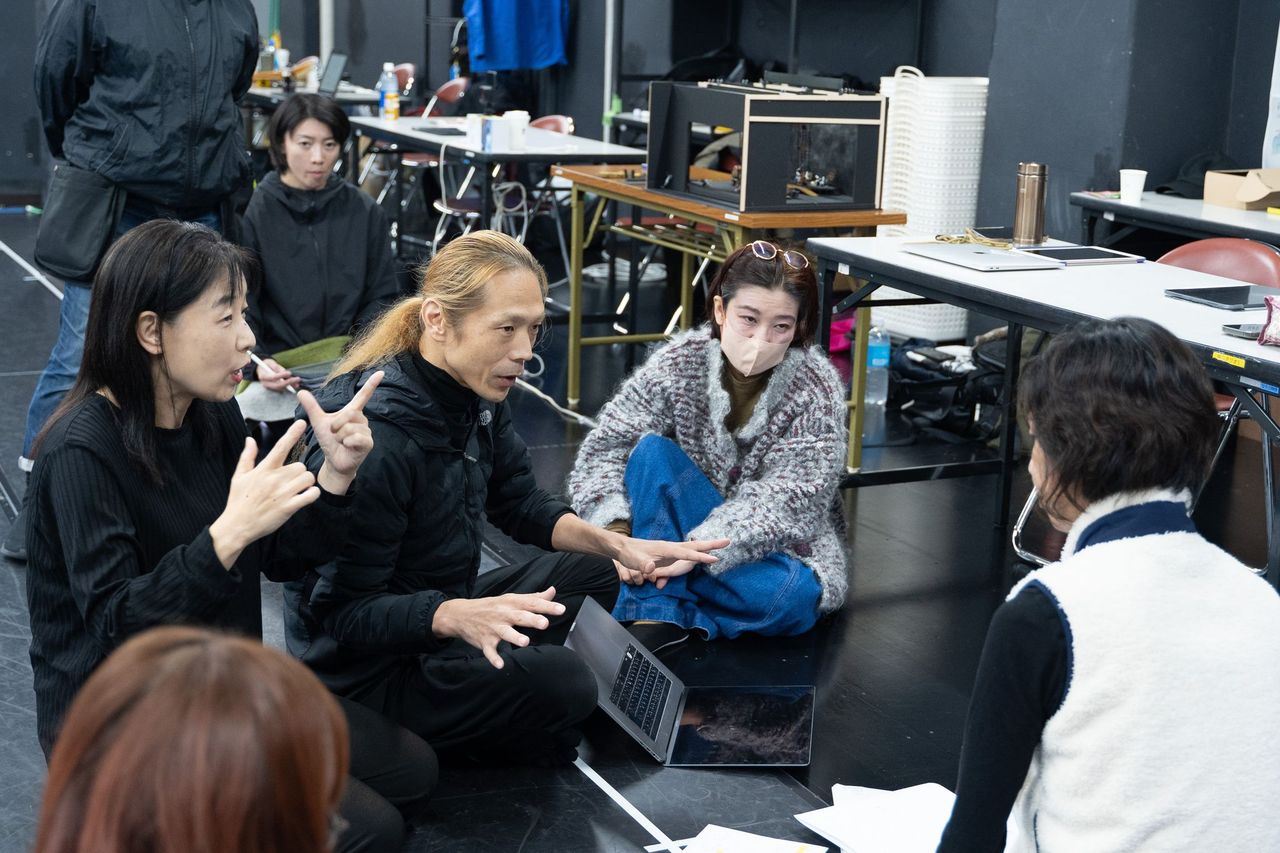
Interpreting Cultures
All three say that sign language interpretation is not just about language translation. “Of course, accuracy is the key, but I thought it was important to receive the thoughts behind the words and interpret them with those thoughts on them. I felt that it was the role of the interpreter to connect them.”
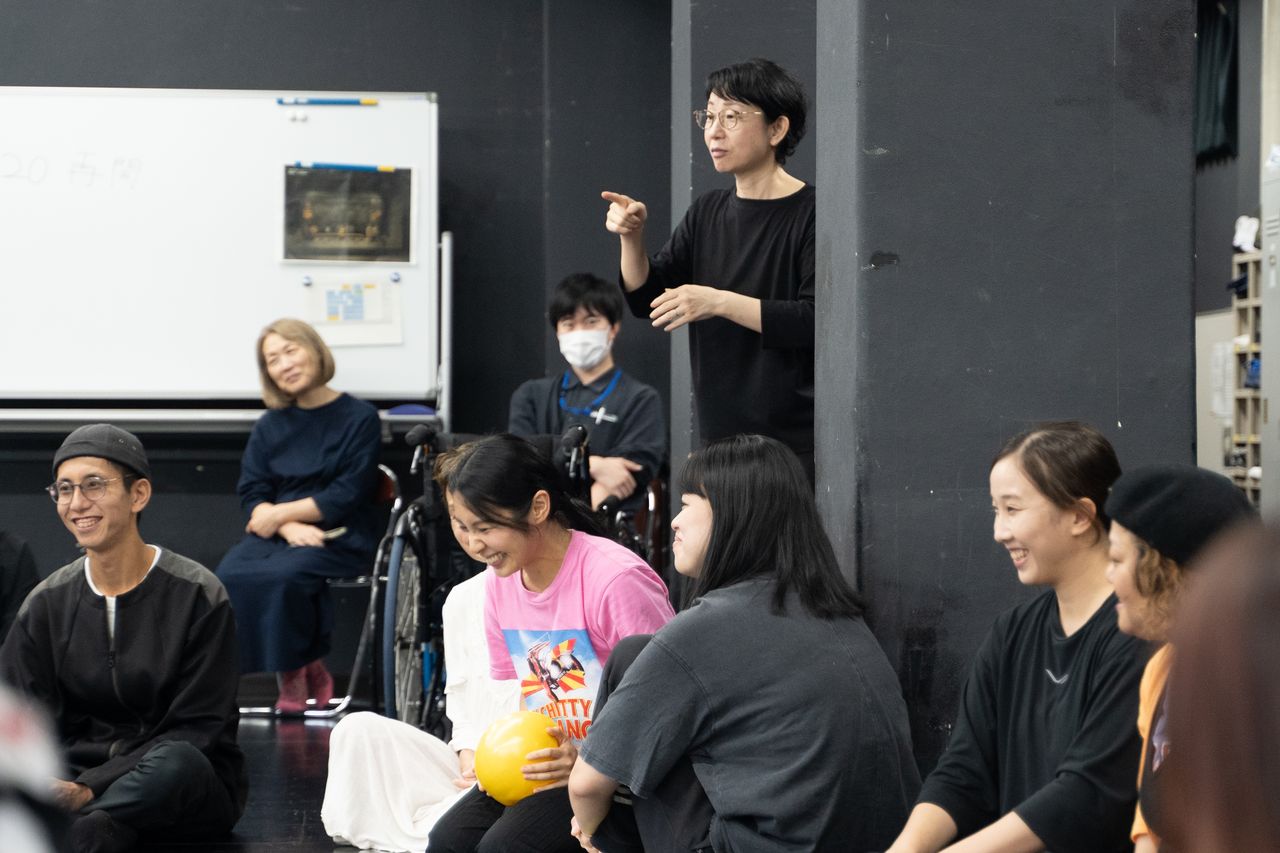
“I think it’s absolutely important to listen to what they want, not because they can’t hear it, or if they can see it, they won’t enjoy it, but what they want.” He says.
Finally, I asked him about his future aspirations. “I want to improve my Japanese language skills, improve the accuracy of reading and expression,” said Iwamoto, “I want to develop the ability to see the entire site from a broad perspective,” said Shimizu. “We will improve our ability to respond to the situation at the site,” said Mr. Ohara. I look forward to the future success of the three people.

![[On-site report vol.06] &…](https://awt.rekibun.or.jp/wp-content/uploads/2026/02/Chupikiさん_写真_11-768x512.jpeg)