




[Field Report Vol.08] Edo-Tokyo Tatono Garden walking with everyone of the Tokyo Association of Friends of the Deafblind
2026/03/06
Edo-Tokyo Tamoto no Garden is located in the nature-rich Koganei Park. The historical buildings where people lived and traded from the Edo period to the mid-Showa period were relocated, and daily necessities are also displayed so that you can see what it was like at that time. Visitors can walk around the city, and of course they can enter the temple, and it is an open-air museum where you can feel the changes of nature throughout the four seasons. This time, I will tell you about the state of the study meeting held at this Tamoto no Garden.
Study session of the Tokyo Association of Friends of the Deafblind
On November 11th, we welcomed everyone who participated in the study session of the Tokyo Association of Friends of the Deafblind to Tatono Garden. The Tokyo Association of Friends of the Deafblind is an organization that supports deafblind people living in Tokyo with both visual and hearing impairments, and holds many exchange meetings and study sessions for deafblind people every month. This fall, the Tokyo Metropolitan Government and Arts Council Tokyo will be in charge of one study session, and we have been telling you that you will feel close to art and culture and enjoy it. The second study meeting is this visit to the garden.
Start of tour of Edo-Tokyo Tamoto no Garden
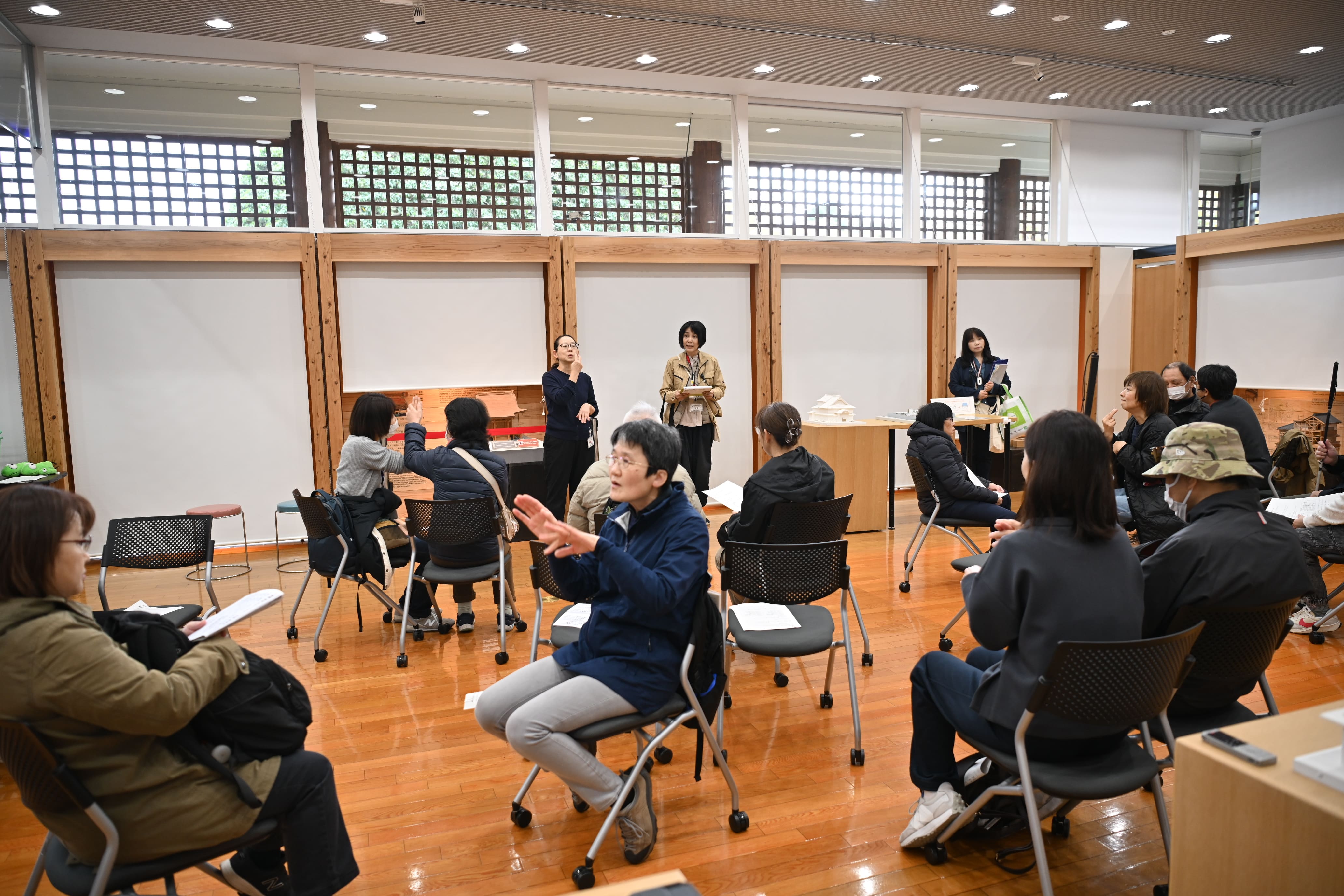
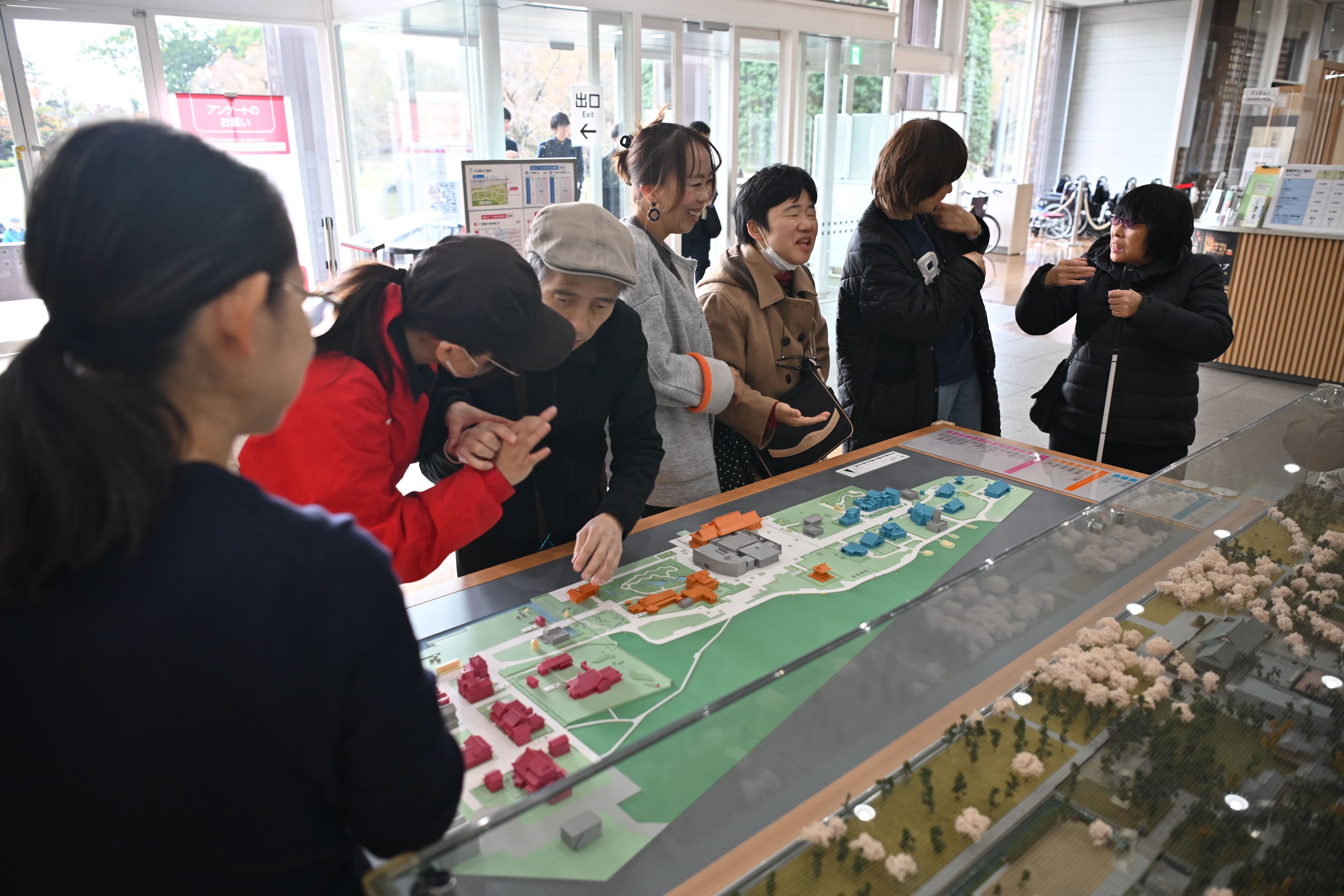
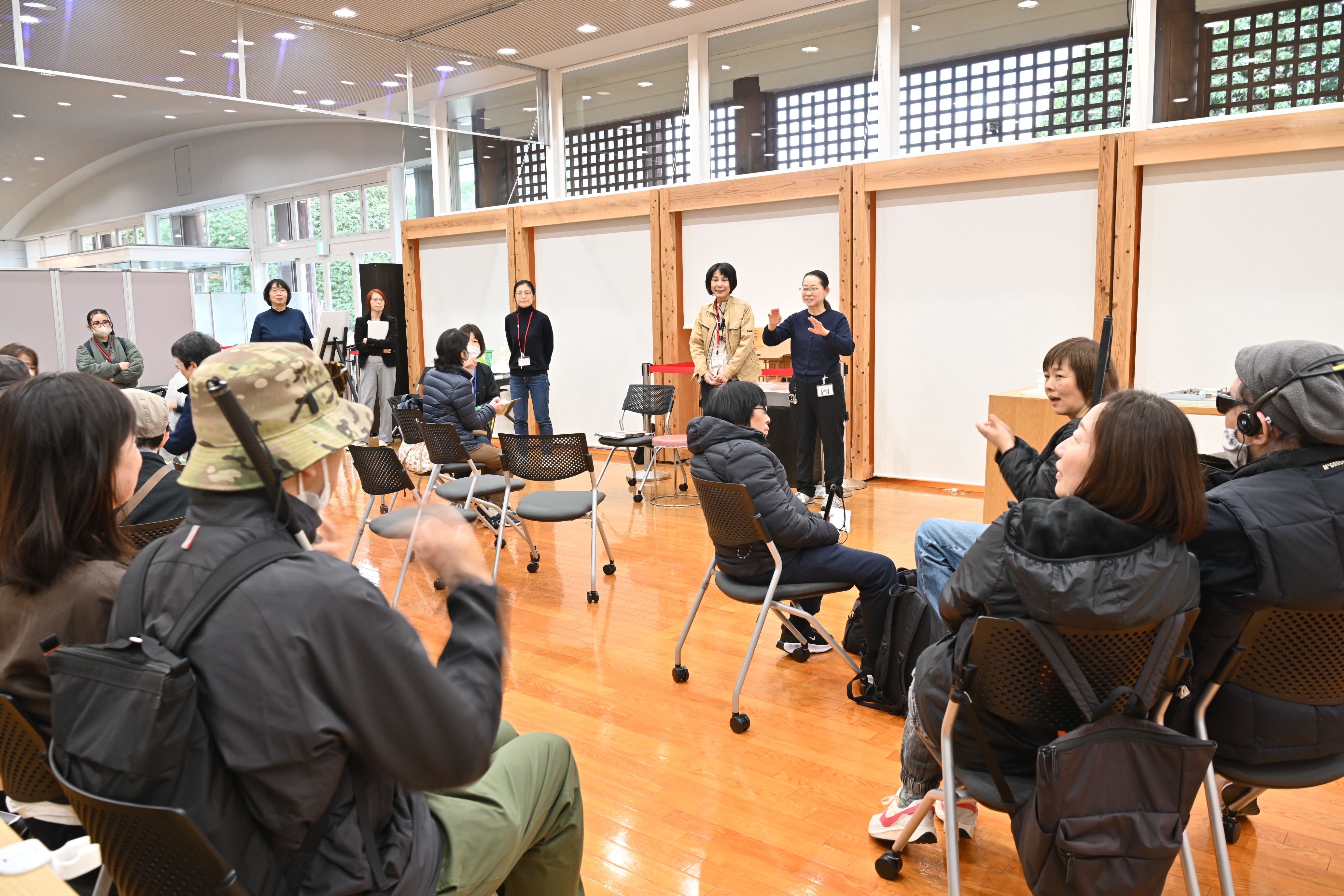
In accordance with the meeting time, everyone who participated in the study session, and the interpreters and caregivers who communicated and accompanied me when I went out were at the visitor center. After sitting down and listening to a brief explanation, the tour finally begins. First of all, let’s start with the tactile model (touching model). The actual park is large and large, and it is difficult to grasp the overall state and the view from above, but the small-sized model allows you to get a bird’s-eye view of the park and the original objects. Here, I spent time touching the models and floor plans of the public baths and thatched roofs that I will actually visit, and asking questions to the staff. And after checking the overall model of the large garden, it is finally time to leave for the park with the staff of the garden.
The hearth of a farmhouse in the Edo period and the public bath in the Showa era
The staff has been preparing for the tour of this Tamoto Garden for several months. Thinking about how to let the deafblind people enjoy the garden and experience the life of Edo and Showa, we started by narrowing down the places to visit from among the 30 buildings and exhibits in the vast site. The first thing we decided to do was to hold the event on the afternoon of November, when autumn deepened, so we would gather around the edge of the hearth where a fire was lit and deepen our learning about the life of the old farmers while feeling the smoke at the Tenmyoke family of a thatched-roof farmhouse. In addition, pumping water from a well and a Toden vehicle were also candidates. In preparation, we had a researcher who was also a deafblind person visit the park, and the staff learned the basics about the deafblind person, and we also provided an opportunity to actually go around the park and verify it. As a result, this time, we prioritized listening to the staff’s explanations and asking questions in their own communication methods, and we decided to have two public baths: “Tenmeiya” with a hearth and “Kohoyu” in the Showa era.
Showa life at the public bath “Kohoyu”
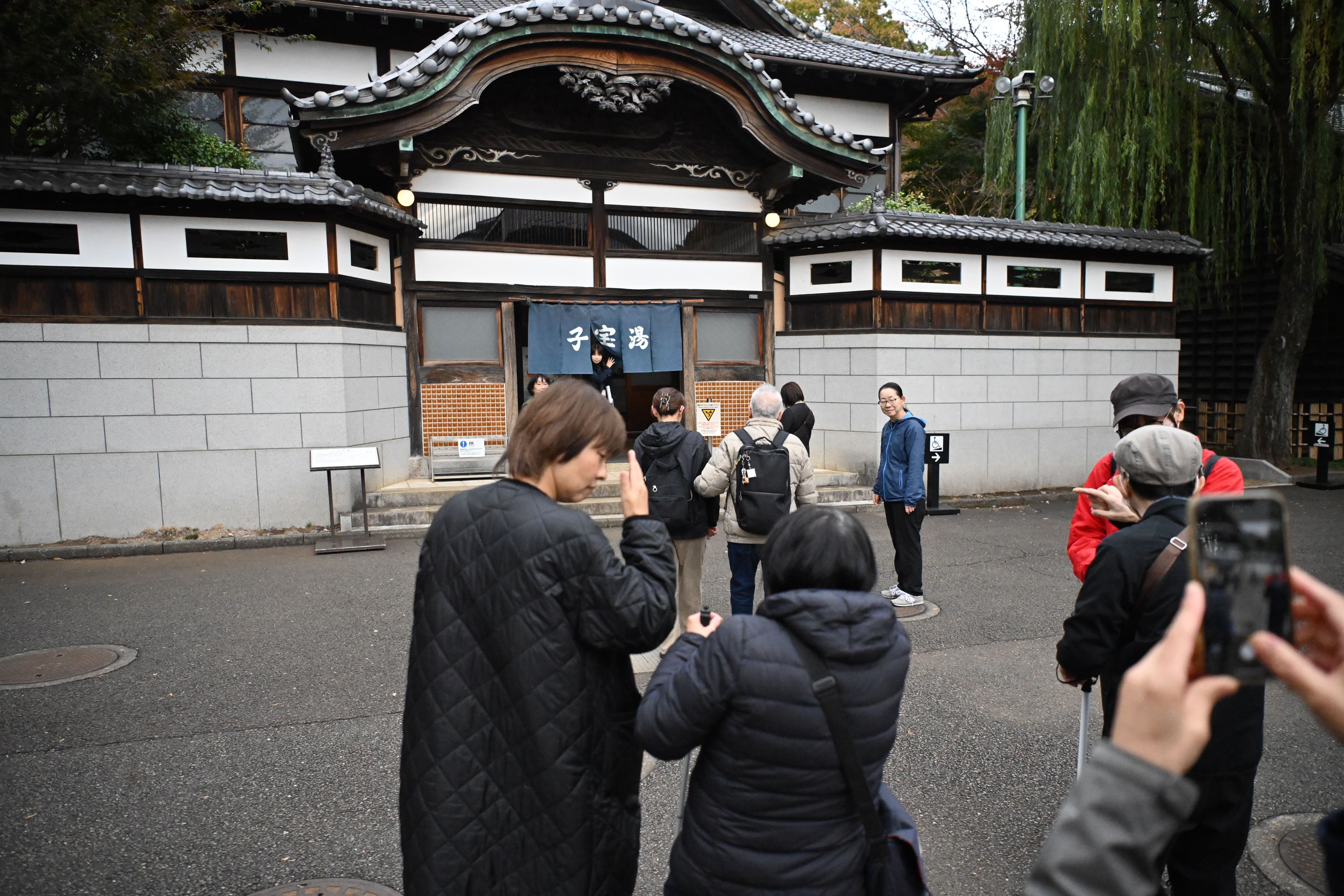
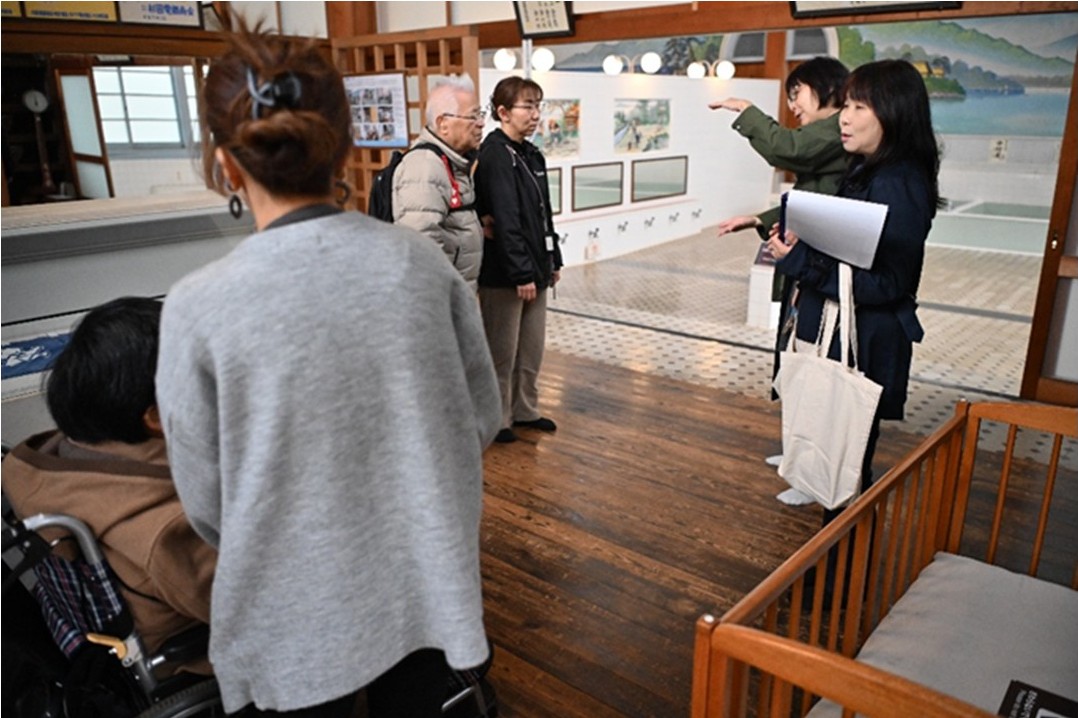
Arrived at the public bath “Kohoyu”. Everyone had checked the model of the child treasure bath at the visitor center, and even before entering the tatono, they began to talk in their own ways, such as tentacle language and sign language. I put my shoes in the shoe rack, passed through the dressing room, and proceeded to the bathroom and bathtub with tiled floors.
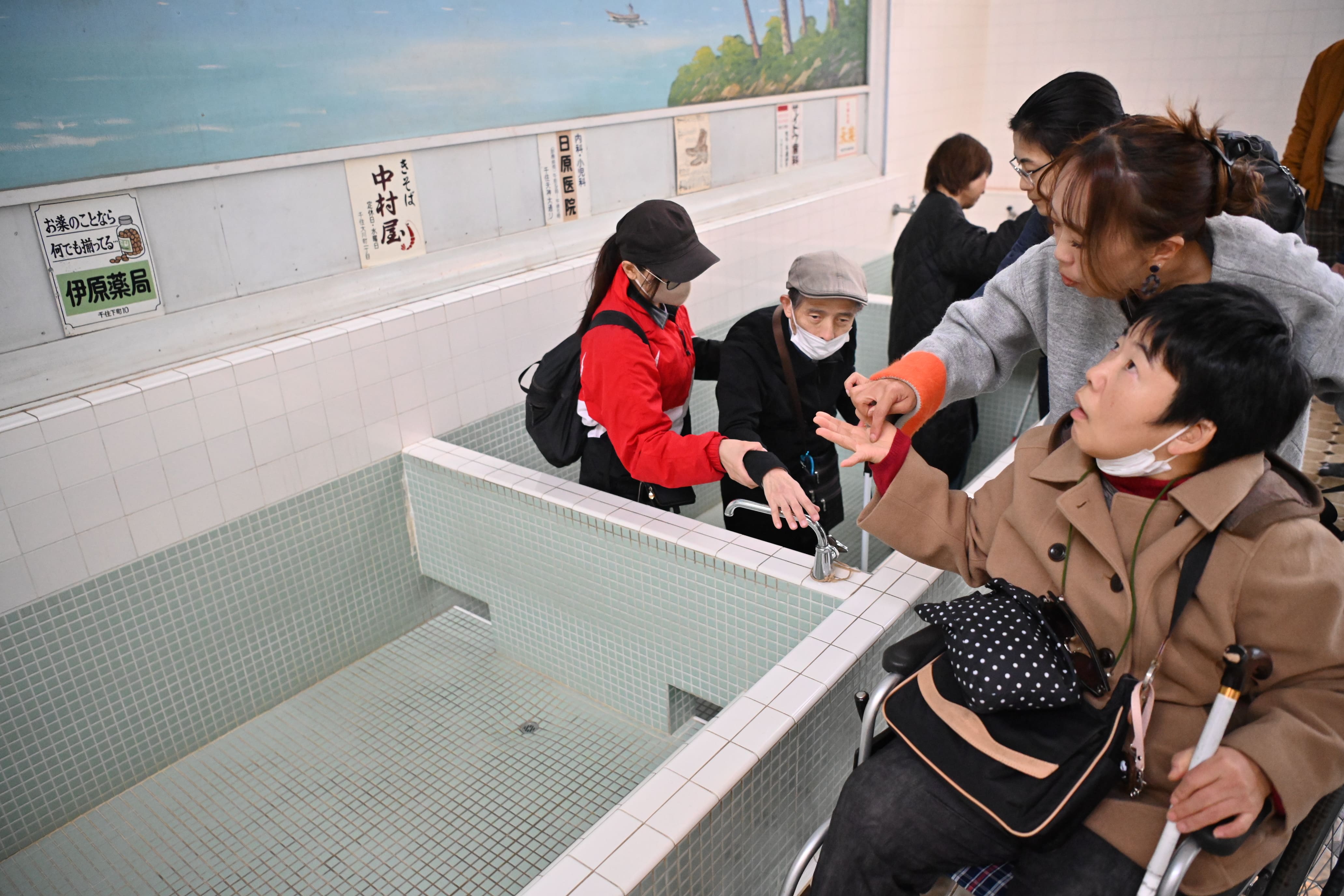
When I was explained, “It was a time when there were many houses without baths, so the bathtub was deep enough to be put in even while standing so that many people could use it,” everyone was curious. Some people were careful to enter the deep bathtub and actually experience its depth, some touched the tiles in the bathroom, and some reminisced about their youthful memories from the exhibits and wall decorations in the dressing room that conveyed what life was like at that time.
Experience of farm life in the Edo period
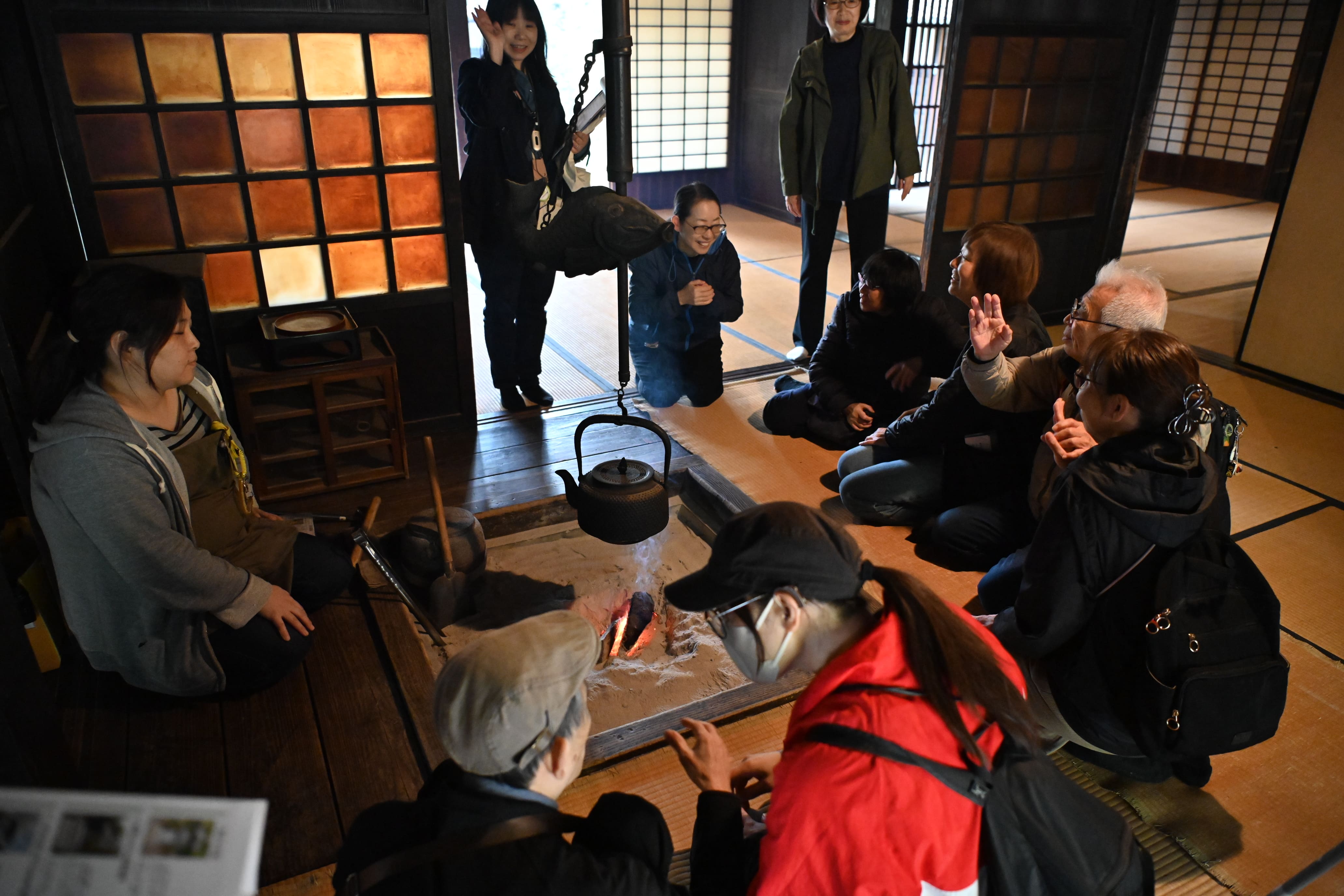
When it was a little chilly while walking outside, the warm hearth of the Tenmei family greeted everyone. When the staff explained that the smoke dries out the thatched roof and has the effect of preventing insects around the edge of the hearth, some people say, “I see” and “That’s how the smoke rises on the roof.” When I got into the seat of the car and sat around the fire, for some reason the conversation was lively, and the time passed slowly as if I felt relaxed.
There was a magnificent threshold at the entrance of the farmhouse, and there were steps to go up from the earthen floor to the room, and it was difficult to get in and out, but each of these may have been an opportunity to get a glimpse of life in the Edo period.
A garden for each person
We returned to the visitor center and asked everyone who participated in the event their impressions and expectations for the future. Many commented that “the depth of the bathtub was amazing”, “I can’t forget the warmth of the hearth”, “I was able to walk with peace of mind because there was a model to touch”, and “I heard that there are other things to do, so I want to come back and want to hold it again”. I was also able to hear the story of a family who said, “When my children were small, I often brought them to listen to paper plays.”
When I left the Tenmei house, pampas grass, which is also a material for thatching, is planted. One of the participants said that he touched the pampas grass and was able to create an image of thatch. When I look around the garden in this way, I realize that the life of the past was full of rich feelings. We will be reminded that each place shows a different expression, such as smell, touch, air, and sound resonance. It was a day of study sessions that I strongly felt that the next time the deafblind people came to the park, there was a strong expectation that the museum would be more enjoyable and learning for everyone, regardless of whether they had a disability or not.
To create an environment where everyone can enjoy art and culture
Arts Council Tokyo Division Yuriko Komai
The year 2025 of All Welcome TOKYO was a very important year for Tokyo Metropolitan Cultural Institutions (Edo-Tokyo Museum, Edo-Tokyo Tato-no-en, Tokyo Metropolitan Art Museum, Tokyo Metropolitan Teien Art Museum, Tokyo Metropolitan Museum of Photography, Museum of Contemporary Art Tokyo, Tokyo Arts and Space, Tokyo Shibuya Koen-dori Gallery, Tokyo Bunka Kaikan, Tokyo Metropolitan Theatre).
Since 2021, we have been promoting “Creative Wellbeing Tokyo,” a project that aims to improve the accessibility of arts and culture so that everyone, from infants to the elderly, can encounter and participate in cultural facilities and art programs, regardless of disability or language and cultural differences. Starting in 2023, the Arts Council Tokyo and Tokyo Metropolitan Cultural Facilities worked to create an environment where everyone can enjoy art and culture in three steps.
The three steps are to create an environment for the information necessary for those who have not yet encountered art and culture>
Improving the environment for appreciation of necessary for visitors to enjoy art and culture>
And we will create an environment for participation so that we can think about maintenance together and play an active role as artists>
The final year of this plan is 2025, which is also the year of All Welcome TOKYO. In the past three years, I have met many people and have been able to listen to their stories. In this report, I cannot introduce all of our efforts, but we are making use of what we have heard so that everyone can experience art and culture in all facilities and businesses.
It doesn’t end here. After this, the Creative Wellbeing Tokyo project will continue, and we will continue to work to ensure that cultural facilities and art culture can connect with people and feel a comfortable place for each person. If you are unsure, please come and visit us. There is also video content, so please take a look. We look forward to meeting you all.

![[On-site report vol.06] &…](https://awt.rekibun.or.jp/wp-content/uploads/2026/02/Chupikiさん_写真_11-768x512.jpeg)